
Skin Checks and Skin Cancer Checks in Canberra
A skin check looks for moles, spots or lesions that may need a closer look. At Franklin General Practice, our doctors assess skin concerns, talk through your risk factors, and recommend a clear next step; whether that’s monitoring, treatment or a referral.
- Qualified skin-cancer specialist GPs
- Advanced diagnostic tools
- Mixed billing available
- New patients welcome
- Experienced local GPs
- Mole and spot checks
- Skin lesion review

Location
54 Nullarbor Avenue, Franklin ACT 2913

What we check
Moles, changing spots, sun damage and skin lesions

Billing
Mixed billing — bulk billing available for selected doctors

Booking type
In-clinic appointment, online or by phone
What Is a Skin Check?
A skin check is a visual examination of your skin, looking for moles, spots, or even patches that have changed or look unusual. Our GP checks common areas and less obvious spots. We will compare what we see against your history and check any concerns you raise.
There are two general types:
- A full body check looks at your skin from head to toe, including the scalp, back, and areas you can't easily see yourself.
- A single spot check focuses on one mole or lesion you're specifically worried about, and is usually a shorter appointment
What Are the Signs You Need a Skin Check?
If something on your skin has changed, or you haven’t had a check for a while, it’s worth booking a skin check with a Canberra GP rather than waiting.
You may want to book a skin check appointment if you notice any of the following:
- Mole Checks: A new or changing mole.
- Changing Spots: A spot that's shifted in size, shape or colour.
- Non-Healing Spots: A mark that hasn't healed within a few weeks.
- New Skin Growths: A new or precancerous-looking growth.
- Sun Damage: Visible sun damage or a history of heavy sun exposure.
- Bleeding or Itching Spots: A lesion that bleeds, itches, or feels tender.
- Previous Skin Cancer: A prior skin cancer diagnosis or removal.
- Family History: A close relative with melanoma or skin cancer.
- Referral Guidance: Wanting advice on whether a referral is needed.
- Follow-Up Checks: A scheduled review after a past finding.
What Happens During a Skin Check?
During your skin check with a GP in Canberra, your doctor will ask a few questions about your skin and risk factors, then check your skin and any moles or spots that may need a closer look.
- Discussion first: Your GP asks about your skin history, family history, sun exposure, and anything specific you've noticed.
- The examination itself: A comprehensive skin check includes dermoscopy and, where appropriate, digital imaging to record and track spots over time.
- Biopsy if needed: If a spot needs further testing, it can usually be sampled by the same doctor at the same visit, without a separate referral for most procedures.
Who Is Most at Risk of Skin Cancer?
Skin cancers don’t all look the same. They can appear white, pink, brown or black, stay one colour or show several, and grow slowly over years or change within weeks. Doctors pay more attention to spots that are raised, firm to the touch, or growing quickly.
If you have a spot that concerns you, ask reception about a lesion-of-concern appointment rather than waiting for your next routine check.
People at higher risk of developing skin cancer generally have one or more of the following:
- Fair skin that burns easily.
- Light-coloured eyes.
- Lots of freckles.
- A personal or family history of skin cancer, particularly melanoma.
- A history of severe or frequent childhood sunburn.
- Regular outdoor work or sport.
- Many moles on the skin.
- A weakened immune system.
- Past use of solariums or tanning beds.
How Often Should You Have a Skin Check?
More than 1 million treatments for non-melanoma skin cancers are given in Australia each year, and UV levels of 3 or above can damage unprotected skin. So, you should have a professional skin check at least once a year and do your own skin check about once a month.
Most GPs suggest an annual skin check
- Every 6 to 12 months for people with several risk factors.
- Every 1 to 2 years if you have no family history of skin cancer.
- Every 3 to 6 months if you have a personal or family history.
Our GP can help set a schedule that fits your personal risk.
In-Clinic Appointments vs Telehealth: Which Is Better?
In-clinic appointments Skin checks are completed in the clinic, because your GP needs to visually assess the skin concern in person. Telehealth is generally not suitable for a full skin check, but it can help with some follow-up discussions where that’s clinically appropriate.
What Does a Skin Check Look For?
A professional skin check looks for signs of melanoma, basal cell carcinoma (BCC), squamous cell carcinoma (SCC), precancerous growths, and other unusual skin lesions across your body.
Melanoma
Melanoma develops in the pigment-producing cells of the skin and can spread to other parts of the body if not caught early. It often appears as a new or changing mole with an irregular shape or uneven colour.
Basal Cell Carcinoma (BCC)
BCC is the most common form of skin cancer. It tends to grow slowly and rarely spreads elsewhere, but can still cause local damage if left untreated, and may appear as a pearly lump or a persistent scaly patch.
Squamous Cell Carcinoma (SCC)
SCC often shows up as a thickened, scaly or crusted spot, and grows faster than BCC. It carries a small but real risk of spreading if it isn't treated, which is why non-healing or thickened spots are worth having assessed.
What Happens If We Find a Suspicious Spot?
During a skin check, our doctors carefully examine moles, freckles, and other lesions to identify any changes that may indicate cancer or precancerous growths. If any suspicious spots are found, our doctors may recommend a minor procedure, such as a biopsy or excision, to remove or test the affected area. These procedures are performed under local anaesthetic. Our doctors can provide advice on sun protection, skin monitoring, and appropriate follow-up care to maintain healthy skin.
How Are Moles and Skin Cancers Removed?
Removal methods depend on the type, size, and location of the lesion, and our GP explains the most suitable option for your situation. Common approaches include:
- Shave excision, removing a thin layer for lesions close to the skin's surface.
- Surgical excision, removing the full lesion along with a margin of surrounding tissue.
- Curettage and cautery, scraping away abnormal tissue and sealing the area.
- Cryotherapy, freezing certain surface lesions such as sun spots.
Sun Exposure and Skin Cancer Risk in Canberra
Canberra has a high risk of skin damage and skin cancer from ultraviolet (UV) radiation, even on cool, cloudy, or winter days. Over 60% of people in the Australian Capital Territory (ACT) get sunburned within 30 minutes outside without protection. Recent studies show that low-intensity UV exposure over time still causes DNA damage in skin cells, even without a visible sunburn. Outdoor sport, gardening and commuting are all part of daily life in Canberra.
The Cancer Council ACT advises minimizing outdoor activities between 11:00 AM and 3:00 PM from October to April, but low-level damage can still happen during winter. Wearing SPF50+ sunscreen, a broad-brimmed hat and sunglasses whenever the UV Index reaches 3 or above can reduce long-term risk.
How Should You Prepare for a Skin Check?
Book your in-clinic skin check online. If you have records from a previous skin check, bring them with you, and make a note of any recent skin concerns so you remember to mention them during your appointment.
- Book your skin check in Canberra with Franklin General Practice online through HealthEngine or HotDoc, or call our clinic to make an appointment.
- Share your skin history, sun exposure, family history and any recent changes.
- Let our GP examine the mole, spot or skin concern during the appointment.
- Take note of any advice, follow-up guidance, referral or management plan discussed.
- Book a further review if monitoring, treatment planning or specialist assessment is recommended.
Our Skin Check Doctors in Franklin




Skin Checks for Gungahlin, Franklin, North Canberra, and Nearby Suburbs
Seeing the same GP locally in Franklin for regular skin checks can make it easier to track changes in your moles and spots over time. At Franklin General Practice we welcome patients from Gungahlin and across Canberra’s northern suburbs. Our GPs provide thorough head-to-toe skin checks in Gungahlin, so you can have your skin checked locally.
We do regular skin checks, skin cancer checks, percutaneous growth, mole checks, changing spots, sun damage concerns, and skin lesion reviews. Our GPs discuss recent changes, your concerns, any history, treatment planning or further review.
You can book a skin check appointment at Franklin General Practice in Franklin, close to Gungahlin and other parts of North Canberra. If a procedure or referral is needed afterwards, it can be arranged without sending you elsewhere for a separate assessment first.
Suburbs served:
- Gungahlin
- Harrison
- Crace
- Palmerston
- Throsby
- Casey
- Ngunnawal
- Amaroo
- Nicholls
- Moncrieff
- Taylor
- Bonner
- Forde
Fees and Billing for Skin Checks
Franklin General Practice operates on a mixed billing model. Skin check fees vary by appointment type, length and Medicare eligibility, and bulk billing may be available for children, pension card holders and concession card holders. For current fees, see our fees and billing page or contact reception before booking.
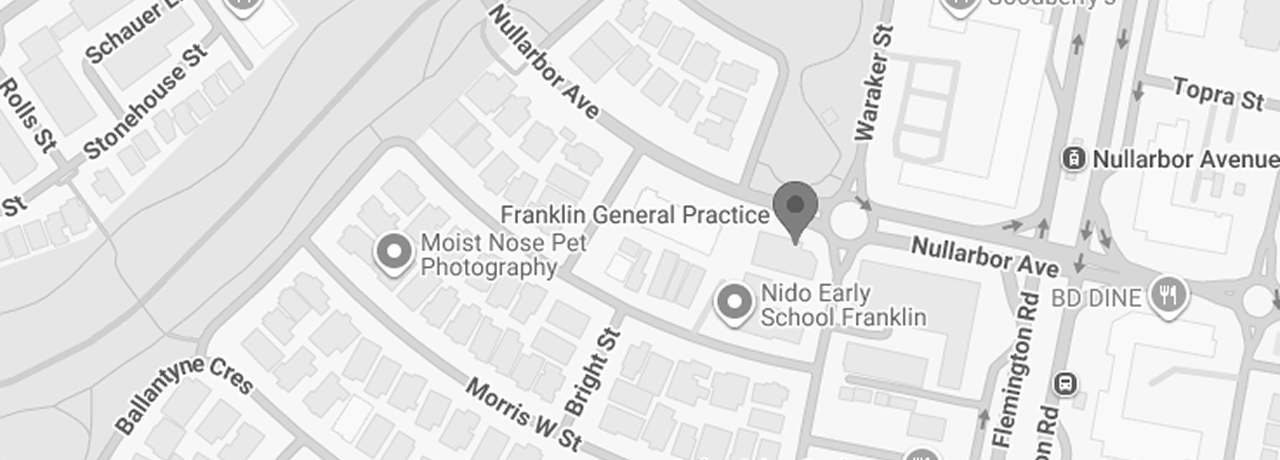
How to Find Our Franklin Clinic
Address
Franklin General Practice 54 Nullarbor
Avenue, Franklin ACT 2913
contact@franklingeneralpractice.com.au
Phone
(+61) 02 6253 8663
Opening Hours
Monday
9:30am - 6:00pm
Tuesday
9:30am - 6:00pm
Wednesday
9:30am - 6:00pm
Thursday
9:30am - 6:00pm
Friday
8:00am - 6:00pm
Saturday
9:30am - 1:00pm
Sunday
Closed
Frequently Asked Questions
Do I need a referral for a skin check?
No. You can book a skin check directly with your GP without a referral.
How long does a skin check take?
A standard full-body check usually takes 15–20 minutes, though this can vary depending on how many areas need closer attention.
Is a skin check painful?
No. The examination itself isn’t painful. If a biopsy is needed, the area is numbed with local anaesthetic first.
How often should I have a skin check?
Most people benefit from an annual check, with more frequent checks recommended for those with several risk factors. Your GP can advise what’s right for you.
At what age should I have my first skin check?
There’s no fixed starting age, it depends on your risk factors, family history and any changes you’ve already noticed. Speak with your GP if you’re unsure.
Does Franklin General Practice offer skin cancer checks in Gungahlin?
Yes. Our Franklin clinic serves patients across Gungahlin and surrounding North Canberra suburbs.
Can I book a mole check in Franklin?
Yes, a single mole check can be booked as a shorter appointment if you have one specific spot you’d like assessed.
Can I request a female doctor for my skin check?
Yes, subject to availability. Let reception know your preference when booking.
How long do biopsy results take?
Pathology results typically take one to two weeks, though this can vary depending on the lab and the type of test.
Should I see a GP or a skin cancer clinic for a skin check?
Either option is reasonable. A GP who already knows your history can track changes over time, while dedicated clinics may offer additional imaging technology. Speak to reception if you’re unsure which suits your situation.
Our GP & Healthcare Other Services
We provide a broad range of general practice services. Some need a longer appointment than a standard consultation. If you’re not sure which appointment type you need, our reception team can help when you book.

Women's Health

Men's Health

Antenatal Care

Sexual Health

Skin Checks & Surgery

Minor Procedures & Surgery

Wound Care

Immunisation

Specialist & Occupational

Iron Infusion

Commercial Driver Medicals

Workers' Compensation

Weight Management

Mental Health

Children's Health

Circumcision

Heart Health Check

Weight Loss and Lifestyle Medicine

Chronic Health Management

Accident emergency care & wound care

Acute Illness & Injury

Travel Medicine and Vaccination

Home Visits

Employment & Fitness Certificates

Driver Licence & Disability Parking Permits
Franklin General Practice
Book a Skin Cancer Checks
Phone
(+61) 02 6253 8663
Opening Hours
Monday
9:30am - 6:00pm
Tuesday
9:30am - 6:00pm
Wednesday
9:30am - 6:00pm
Thursday
9:30am - 6:00pm
Friday
8:00am - 6:00pm
Saturday
9:30am - 1:00pm
Sunday
Closed
Book a Skin Check at Franklin
General Practice
If you have a changing mole, a new spot, a sun damage concern, a non-healing lesion or a family history of skin cancer, book a skin check at Franklin General Practice.
Book online or call reception on 02 6253 8663 during opening hours. New patients are welcome. For care outside our opening hours, see our after-hours page.