Men’s health checkups change with age. Those who have regular checkups have a higher chance of detecting health issues early. Then they can take preventive steps. The longer it takes to detect a health condition, the harder it can become to treat it properly. The cost of treatment can also add to the pressure.
In your 20s, the focus is on blood pressure, skin, mental health, and sexual health. From 45, heart health, diabetes, and bowel checks become important. Prostate and lung screening may follow from 50. Your 60s add bone health, hearing, vision, and medication reviews. How often you need each check depends on your individual risk. However, the best approach is to consult a GP who can assess your overall health, recommend the necessary tests, and suggest what you should do next.
Even if you feel fine, especially in your 20s or 30s when men tend to be more energetic, regular checks still matter. Today, we will be talking about men’s health checks by age, from 20 to 60+, and discussing the specific health concerns for each age range. This will help you and other men in your family be more careful about regular health checkups.
Why Men Need Regular Health Check
Men need regular health checks because they help to find diseases that may not have visible symptoms and can cause harm silently. This can lead to long-term major problems in the future, and you may need to bear costly treatment. With regular check-ups, your GP can suggest a better lifestyle plan for you based on your specific situation.
Many conditions that affect men, including high blood pressure, high cholesterol and raised PSA, can sit quietly for years.
Heart disease is a leading cause of death for Australian men. Prostate cancer is the most commonly diagnosed cancer in Australian men. There are an estimated 29,000 patients in 2025. Compared to women, men visit a general practice less often. But if you stay in a routine check-up, you can be aware of any health changes earlier, before they become a major issue.
- Early Disease Detection: Conditions like high blood pressure, high cholesterol, type 2 diabetes, and heart disease often have zero warning signs. Screenings find them when they are easiest to treat.
- Longer Life Expectancy: Statistics show that men die significantly earlier from preventable causes than women, making routine visits a vital defense.
- Cancer Screening: Regular checks catch life-threatening conditions early, including prostate, colorectal, testicular, and skin cancers.
- Cost Savings: Managing a condition early through a primary care visit costs far less than emergency room visits or major specialty treatments.
- Mental Health Support: Routine exams open the door to talking about stress, anxiety, depression, and lifestyle factors.
Health Checks Every Man Needs at Any Age
Before we talk about the age-specific health check, there are some common health checks every man from 20 years to 70+ should have: blood pressure, skin, mental health, and dental, eye, and sexual health.
Blood Pressure
After late adolescence, men should have a blood pressure checkup at least every two years. If anyone detects high pressure, then go for checkups more often. 120/80 pressure is healthy, but 140/90 or above is high.
Skin Checks
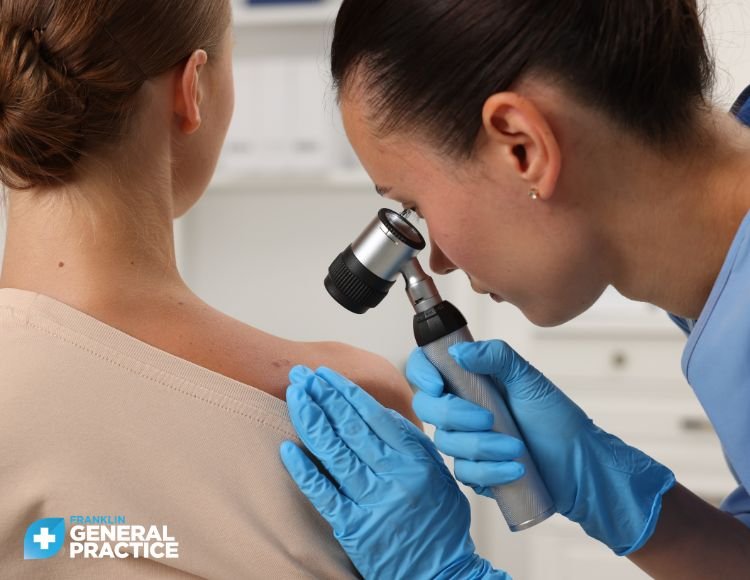
Book a skin check when you notice a new or changing spot. Go for yearly checks if you have risk factors such as fair skin, many moles, heavy sun exposure, or a past skin cancer. Australia has one of the highest skin cancer rates in the world. With our skin check service, you can easily have a check-up to check for changing spots or moles, whether it’s concerning or not.
Mental Health Check-Ins
Mental health is something most men ignore, but they should not and should have a routine visit if they have sleeping problems, energy problems, stress, or long-term depression. Depression in men often looks like irritability or anger. Many have heavier drinking rather than sadness.
Dental, Eye and Sexual Health
See a dentist once or twice a year. Have your eyes tested every one to two years. Talk to your GP about sexual health. Eye tests can pick up conditions like glaucoma before you notice vision changes.
Check | From age | How often |
Blood pressure | Late teens | At least every 2 years |
Skin check | Any age | Yearly if higher risk |
Testicular self-check | Late teens | Regularly, so you know your normal |
STI testing | When sexually active | New partner; yearly for chlamydia if under 30 |
Type 2 diabetes risk (AUSDRISK) | 40 | Every 3 years |
Heart Health Check | 45 | As your GP advises |
Bowel screening | 45 | Every 2 years to 74 |
PSA discussion | 50 (45 if higher risk) | Every 2 years if you choose testing, to 69 |
Lung screening (if eligible) | 50 | Every 2 years to 70 |
Bone density | 70 (earlier with risk factors) | As your GP advises |
Health assessment | 75 | Yearly |
Men's Health Checks in Your 20s
In your 20s, men are energetic and forget to have regular health check-ups. But those who are careful can prevent a lot of diseases in the future. During this time, the priorities are a baseline blood pressure and weight, regular testicular self-checks, sexual health testing if you’re sexually active, and watching your mental health.
Testicular Self-Checks
Check your testicles regularly so you know what’s normal. See a GP about any lump, swelling, or change in size or shape. Testicular cancer is the second most common cancer in men aged 20 to 39, and the average age at diagnosis is 36. There is no routine screening test, so you have to be self-aware.
The most common sign is a painless lump. In a warm shower, roll each testicle gently between your thumb and fingers.
Sexual Health and STI Screening
If you’re sexually active, get tested when you start a new relationship or after unprotected sex. Go for yearly screening for chlamydia if you’re under 30. Many infections cause no symptoms. So you can pass one on without knowing. A GP can suggest tests for chlamydia, gonorrhoea, syphilis and HIV. This needs a urine sample and a blood test.
Baseline Weight and Blood Pressure
Record your weight, waist measurement and blood pressure in your 20s so later changes are easy to spot. Cholesterol and blood sugar tests aren’t routine at this age without a risk factor. But being a smoker, being overweight, or having a strong family history are reasons one should go for a health checkup. At least once, review the vaccinations you had in school and list the ones you did not have. Then try to get those vaccines.
Men's Health Checks in Your 30s
Your 30s are for building a baseline. Check blood pressure and weight, test cholesterol and blood sugar if you have risk factors, and review your family history. These numbers become your reference point for later decades.
Cholesterol and Blood Sugar
Cholesterol and blood sugar tests are worth doing in your 30s if you have a risk factor: being overweight, smoking, high blood pressure, or a family history of heart disease or diabetes. Both are simple blood tests. Without risk factors, routine testing usually starts later, from 40 for diabetes risk and 45 for heart checks.
Family History Review
Tell your GP which close relatives have had heart disease, diabetes or cancer, and at what age, because this can bring screening forward. A father or brother with prostate cancer is one example. Write the details down beforehand, because they’re easy to forget on the spot.
A note on testosterone: levels fall gradually with age, but routine testing isn’t recommended if you feel well. If you have ongoing fatigue, low libido or low mood, your GP can arrange a morning blood test.
Men's Health Checks in Your 40s
Your 40s are when heart, diabetes and bowel checks begin. From 45 you can have a Heart Health Check and join the free bowel screening program, and from 40 your GP can assess your diabetes risk. Each is explained below.
The 45–49 Year Old Health Assessment
Medicare funds a one-off health assessment for men aged 45 to 49 who have at least one chronic disease risk factor, such as being overweight, smoking, high blood pressure or a family history. It reviews your lifestyle, weight, waist, blood pressure and risk of diabetes and heart disease, and finishes with a plan. It can only be claimed once, and mental health, alcohol and sleep also come up.
Heart Health Check
A Heart Health Check estimates your chance of a heart attack or stroke over the next five years, and Medicare supports one for people aged 45 to 79 with no known heart disease. Your GP uses your age, blood pressure, cholesterol, smoking and diabetes status to place you in a low, intermediate or high risk group. Waist size matters here, because belly fat is a strong predictor of diabetes and heart disease. Erectile dysfunction deserves a mention too. It can be an early sign of cardiovascular disease, since small blood vessels are often affected first.
Type 2 Diabetes Risk (AUSDRISK)
AUSDRISK is a short questionnaire that estimates your chance of developing type 2 diabetes over five years, and it’s recommended from age 40. It asks about age, family history, waist size, blood pressure, smoking, activity and diet. A high score leads to a blood test and, for ages 40 to 49, a Medicare-rebated risk evaluation once every three years.
Bowel Cancer Screening From 45
Since 1 July 2024, men aged 45 and over can join the free National Bowel Cancer Screening Program, with a home test every two years until 74. If you’re 45 to 49, you can request your first kit online, by phone on 1800 627 701, or through your GP. Blood in your stool or a lasting change in bowel habits needs a GP visit, not a screening kit.
Men's Health Checks in Your 50s
In your 50s, add prostate testing conversations, and ongoing bowel screening. If you have smoking history go for lung cancer screening. And you heart and diabetes checks should continue.
Prostate Health and PSA Testing
Men aged 50 to 69 should have a PSA blood test every two years. But make sure to have a discussion about the pros and cons with your GP. Those men who have higher-risk men can start from 45. Higher risk means having a brother with prostate cancer. Or even a father diagnosed before 65. The advice comes from new national guidelines approved in 2026.
National Bowel Cancer Screening
From 50, the National Bowel Cancer Screening Program mails a free test kit to your home every two years until you turn 74. The test needs two small samples from separate bowel motions, and postage is free. Do it even if you feel healthy, because age is the biggest risk factor. Early bowel cancer often has no symptoms. A positive result leads to a colonoscopy.
Lung Cancer Screening
The National Lung Cancer Screening Program offers a free low-dose CT scan every two years. This is for the people aged 50 to 70 with no symptoms and a smoking history of at least 30 pack-years. Also who still smoke or quit within the past 10 years. A pack a day for 30 years. Or two packs a day for 15, equals 30 pack-years.
Your GP checks eligibility and refers you; the Lung Foundation explains the process. A persistent cough, coughing up blood or unexplained breathlessness needs diagnostic testing instead.
Also remember to check:
- Heart, diabetes, cholesterol, and diabetes checks.
- Eye check.
- Hearing check.
Men's Health Checks in Your 60s
In your 60s, add bone health, hearing and vision, and regular heart and medication reviews. Continue bowel screening (to 74), PSA discussions (to 69), and lung screening (to 70). At 75, an annual Medicare health assessment becomes available.
Bone Density
Men age 70 need bone density scans. Anyone having signs like long-term steroid use, smoking, drinking, low testosterone, or a fracture from a minor fall can go for a bone density checkup before 70. Medicare rebates for scans apply from age 70.
Hearing and Vision
Get your hearing tested if you struggle in noisy rooms. Many face the problem of keeping turning the TV up. It’s better to have your eyes tested at least every two years. With diabetes, a family history of glaucoma should have vision testing from an early age by consulting a doctor.
Heart and Medication Reviews
A GP can check your heart risk. Try to recheck every medication you take at least once a year. Because doses may need to change with age. Taking several medicines raises the chance of interactions. Your GP can also discuss memory concerns and falls prevention. A GP can also suggest vaccines such as shingles, pneumococcal and flu.
Does Medicare Cover Men's Health Checks?
Medicare covers partially, or all of the standard GP consultations. Some men’s health checks have their own Medicare items. Whether you pay a gap depends on the clinic’s billing. The main ones:
- GP consultation: attracts a rebate; the clinic decides whether it bulk bills.
- 45 – 49 health assessment: one-off, for men with a chronic disease risk factor.
- Diabetes risk evaluation: ages 40 to 49 with a high AUSDRISK score, every three years.
- Heart Health Check: ages 45 to 79 with no known heart disease.
- Annual health assessment: available from age 75.
- Free screening: bowel kits (45 to 74) and lung CT scans for eligible people (50 to 70).
- Mental Health Treatment Plan: up to 10 Medicare-rebated psychology sessions a year.
- Blood tests: may be rebated when your GP has a clinical reason, so ask if you're unsure.
The Department of Health explains the 45 to 49 health assessment in detail. Franklin General Practice uses mixed billing, so check our fees and billing page before you book.
Read more about whether Medicare covers skin checks in Australia
How to Prepare for Your Health Check
We suggest bringing the history of any health issues and, if possible, family members’ bloodline health history. Also bring a medication list if you are currently taking any medicines. It is also better to note down the concerns in a list so you do not miss any while talking to your doctor. And try to wear clothes that are easy to move in. And be prepared, as follows: you may need to change your clothes for some tests if needed.
Here is a checklist.
- Write down symptoms, even minor ones.
- Note your family history: which relatives, which conditions, and at what age.
- List your medications and supplements. Bring any recent test results.
- Be honest about habits: smoking, alcohol, exercise and sleep.
- Ask about fasting when you book, because you may need to do some blood tests.
Men's Health Checks at Franklin General Practice, Gungahlin
Our local GPs help men stay on top of their health with preventive checks, health assessments and personalised advice.
Franklin General Practice offers men’s health checks for patients across Franklin, Gungahlin and North Canberra. You can book the services online or by phone easily. You will get the right specialist for your specific health concern, and you can share your problems.
See our men’s health clinic page for more on the service.
Book a men’s health check. [HealthEngine] [HotDoc] or call 02 6253 8663.
Frequently Asked Questions
How often should men get a health check?
There is no single rule. Many men do well with a check every one to two years, and yearly with risk factors or a long-term condition. Your GP can set a schedule that fits.
What does a men's health check include?
Usually a chat about your history and lifestyle, blood pressure, weight and waist measurement, and tests matched to your age, such as blood tests, a skin check or screening referrals.
Do I need a blood test at a health check?
Not always. Tests for cholesterol, blood sugar or testosterone are ordered when your age, symptoms or risk factors give a reason, and your GP will explain why.
At what age should men start prostate checks?
Talk to your GP about PSA testing from age 50, or from 45 if you have a close family history. If you choose testing, it’s usually repeated every two years until 69.
Can I get a men's health check without symptoms?
Yes. A check is useful when you feel well, because many conditions have no early symptoms. Book a standard appointment and mention you’d like a preventive check.